What Book Lovers in Canada Can Learn About Risk and Decision-Making From Online Casino Play
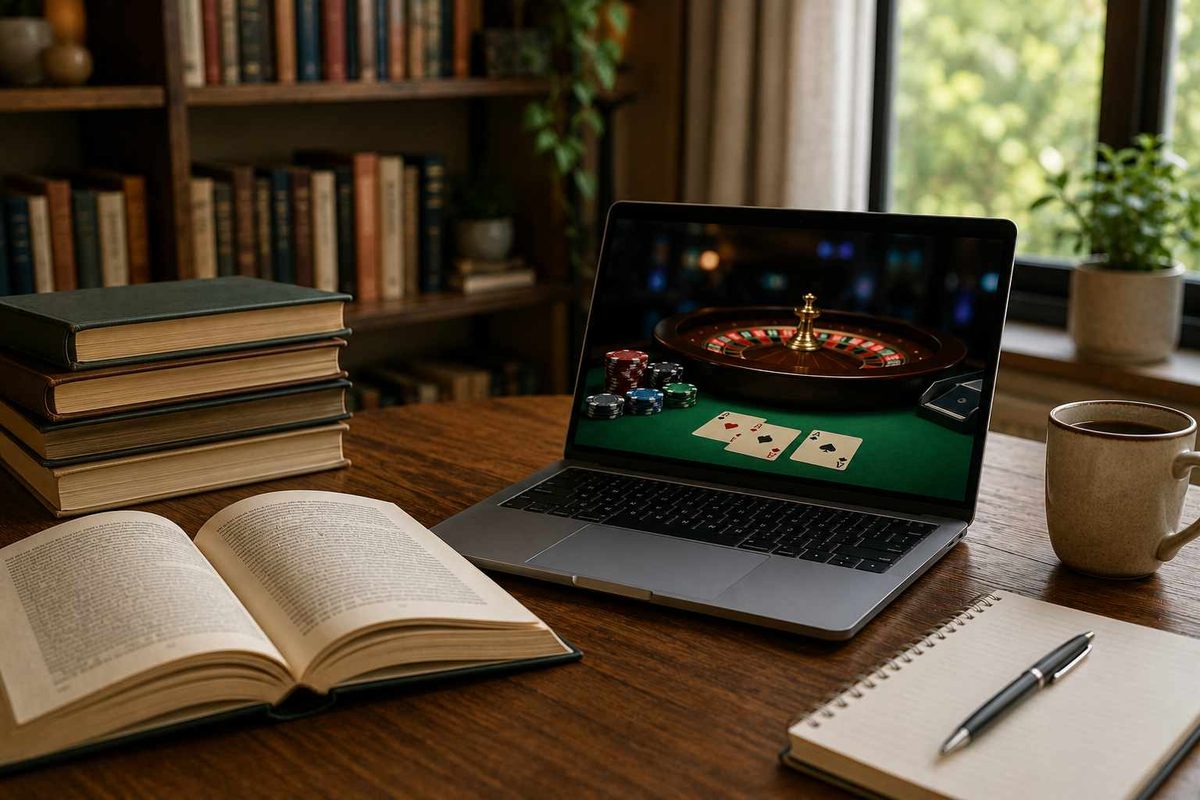
The same instinct that pulls a reader through a risky chapter is the one being tested, in colder terms, on the screen.
Readers spend a lot of time inside other people's choices. Every novel worth finishing turns on a decision made under pressure — a gamble taken, a warning ignored, a door opened that should've stayed shut. We judge those characters from the comfort of the couch. But there's a sharper, stranger mirror for the same instincts, and it isn't fiction at all. It's the cold arithmetic of online casino play, where Canadians can choose from the best gambling sites and watch their own decision-making get tested in real time.
Fiction romanticizes risk. Math doesn't.
Literature loves a long shot. The hero bets everything and wins because the story needs them to. Real risk doesn't care about narrative. That's the first lesson a thoughtful reader can pull from the gambling world: outcomes don't owe you a satisfying arc.
The concept that makes this concrete is expected value — the probability-weighted average of every possible result. It's how casinos price their games and guarantee a long-run edge, and it's the same lens a careful reader could apply to a character's choices. Was the gamble actually rational, or did it just happen to pay off? Fiction blurs that line on purpose. The math refuses to.
Knowing when to fold is a literary skill too
Anyone who's read a tragedy knows the shape of it: a character who can't walk away. They double down, chase the loss, mistake stubbornness for resolve. The sunk-cost fallacy has wrecked more protagonists than any villain.
Watching that same pattern play out at a table — the urge to win back what's gone, the story you tell yourself about being "due" — makes the literary version land harder. The disciplined move, in a novel or at a screen, is usually the unglamorous one: recognizing when the situation has changed and adjusting, rather than clinging to the plan you started with. Good readers spot it in characters. The trick is spotting it in yourself.
"Fiction romanticizes risk. Real risk doesn't care about narrative — outcomes don't owe you a satisfying arc."
— Novel Sounds editorialProbability is just another kind of close reading
Book lovers are already pattern-readers. We track foreshadowing, weigh an unreliable narrator, hold two interpretations at once until the text resolves them. That's not far from probabilistic thinking — sitting with uncertainty instead of forcing a single answer too early.
The gambling frame sharpens it. A reader who can hold ambiguity in a novel can learn to hold it in a decision: this is likely, that is possible, and neither is guaranteed. It's a useful muscle far from any casino — in careers, in money, in the ordinary forks of a life. The book club that picks apart a character's bad call is doing, in softer form, exactly what a clear-eyed player does before committing a chip.
Where the reading community comes in
None of this means readers should rush off to gamble. The point is the thinking, not the activity. And the best place to sharpen that thinking is the same place readers already gather — in conversation. The decision-making in a difficult novel is far richer to dissect with other people, which is why literary events and discussions are where these ideas actually come alive. Arguing about whether a character's choice was brave or foolish is risk analysis in disguise.
It also helps to read widely on the subject. Plenty of fiction and nonfiction circles directly around chance, probability and the psychology of the bet, and working through a few curated reading lists on risk and decision-making does more for your judgment than any single hot take. The throughline from a Dostoevsky gambler to a modern behavioural-economics title is shorter than it looks.
The takeaway for the careful reader
What online casino play offers a book lover isn't a hobby — it's a clarifying metaphor. It strips the romance off risk and shows the machinery underneath: the odds, the edge, the cost of refusing to quit. Hold that next to the choices on the page and both get richer. The characters we love are usually the ones who gamble; the ones we respect are the ones who understand what they're gambling on. For Canadian readers, that distinction is the whole lesson, and it's worth carrying well beyond the last chapter.